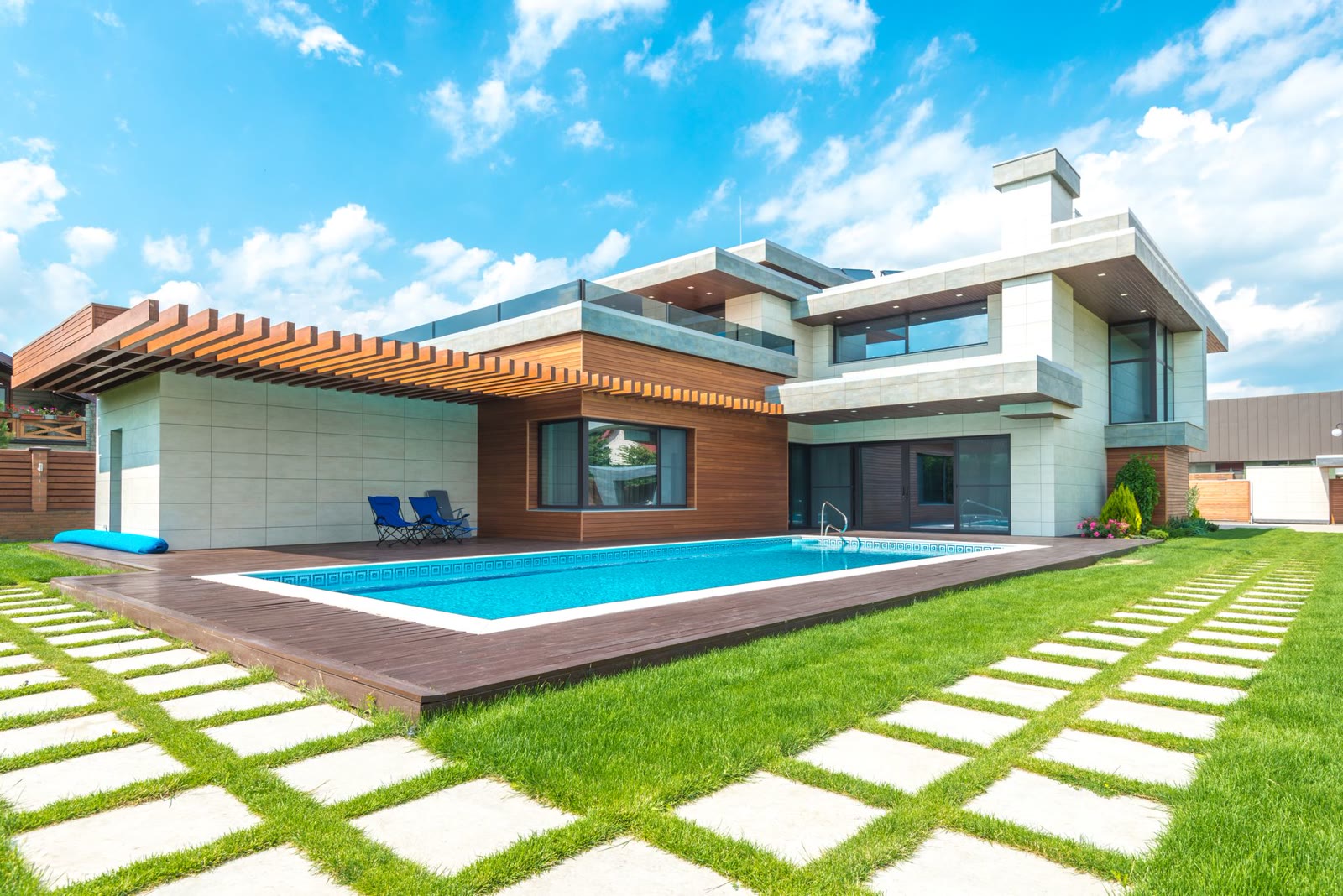
Pool Decking & Hardscape in Austin, TX
In an Austin summer, the deck decides whether the pool is usable barefoot at 3pm. Surface temperature is not a detail, it is the whole experience.
Quick Answer
Pool decking in Austin is chosen primarily for heat: dark and dense surfaces become painful barefoot in Texas summer. The coolest options are travertine and light-colored Kool Deck (a textured, acrylic-modified concrete coating), followed by light pavers, with standard grey and stamped concrete the hottest. Expect roughly $8 to $15 per square foot for Kool Deck and stamped concrete, $15 to $30 for pavers, and $20 to $40 for travertine, installed.
About Pool Decking in Austin
Deck material is the most underrated decision in an Austin pool project, because it is the surface you actually stand on. A deck that reads beautifully in a brochure can be genuinely unusable at 3pm in July, and by then the concrete is poured. Surface temperature, driven by color, density, and texture, should lead the decision.
Travertine is the premium answer: a natural stone that stays notably cooler underfoot, drains well, and suits Hill Country architecture. Kool Deck, an acrylic-modified coating troweled over concrete in a textured finish, is the value answer: it is applied in light colors, its texture holds less heat than smooth concrete, and it costs a fraction of stone. Pavers sit in between, with the practical advantage that individual units can be lifted and reset if the ground moves. Standard broom-finished concrete is cheapest and hottest.
Coping, the cap where the deck meets the pool, is a separate choice worth making deliberately. Bullnose travertine, cantilevered concrete, and cut limestone each change the line of the pool completely, and coping is one of the few details that a guest actually touches.
Who this service is best for
Austin-Specific Considerations
- Central Texas expansive clay moves, so control joints, proper base preparation, and reinforcement determine whether a concrete deck cracks.
- Direct Texas sun makes light colors and textured surfaces the difference between a deck you can cross barefoot and one you cannot.
- Limestone and travertine tie naturally into Hill Country architecture and the local stone palette.
- Deck area counts toward City of Austin impervious cover limits, so pavers with permeable joints can help on constrained lots.
Benefits
Cool enough for bare feet
The right material stays walkable through an Austin August, which is the entire point of a pool deck.
Slip resistance where it matters
Textured finishes and honed stone keep footing secure on a wet deck around active swimmers.
Ties the yard together
Deck, coping, and hardscape are what turn a pool into an outdoor living space rather than a hole full of water.
Built for Texas soil
Correct base prep, joints, and reinforcement prevent the cracking that Central Texas clay causes in poorly built decks.
Our Process
- 01
Discovery & Design Consult
Share your backyard goals, lot details, and budget. We help you connect with a local pool professional who reviews the space, sun exposure, and drainage to shape a realistic concept.
- 02
3D Design & Fixed Quote
Review a custom pool design with materials, finishes, water features, and decking, paired with a transparent line-item estimate before any commitment.
- 03
Permitting & Engineering
Plans are engineered for Central Texas soil and routed through City of Austin or the relevant municipal permitting for setbacks, fencing, and safety code.
- 04
Excavation & Structure
The pool shell is dug, steel is tied, plumbing and electrical are roughed in, and gunite or shotcrete is applied to form a durable, monolithic structure.
- 05
Finishes & Hardscape
Tile, coping, plaster or aggregate interior, decking, and outdoor living features are installed to bring the design to life.
- 06
Startup & Handover
The pool is filled, chemically balanced, and your equipment and maintenance routine are walked through so you can enjoy it with confidence.
Frequently Asked Questions
Kool Deck is a textured, acrylic-modified cement coating troweled over a concrete slab, originally developed for exactly the problem Austin has: concrete that gets too hot to walk on. The combination of light color and a raised, mottled texture means less contact area with your foot and less absorbed heat, and in practice it runs meaningfully cooler than plain grey concrete under the same sun.
It is genuinely worth considering here, particularly on a budget, because it delivers most of the heat benefit of stone at a fraction of the cost. The trade-offs are that it is a coating rather than a material, so it wears and eventually needs recoating (typically every 5 to 10 years), it can stain, and it will not hide cracks in the slab beneath it. If the underlying concrete is sound, it is one of the best value decisions in an Austin pool project.